
Infrastructure 2 min read ·
Cloud Infrastructure: From Chaos to Efficiency
Scattered servers, duplicated data, runaway costs. Here is how a managed cloud migration turns a fragile estate into a system you can rely on.
D By DinoSoft Team
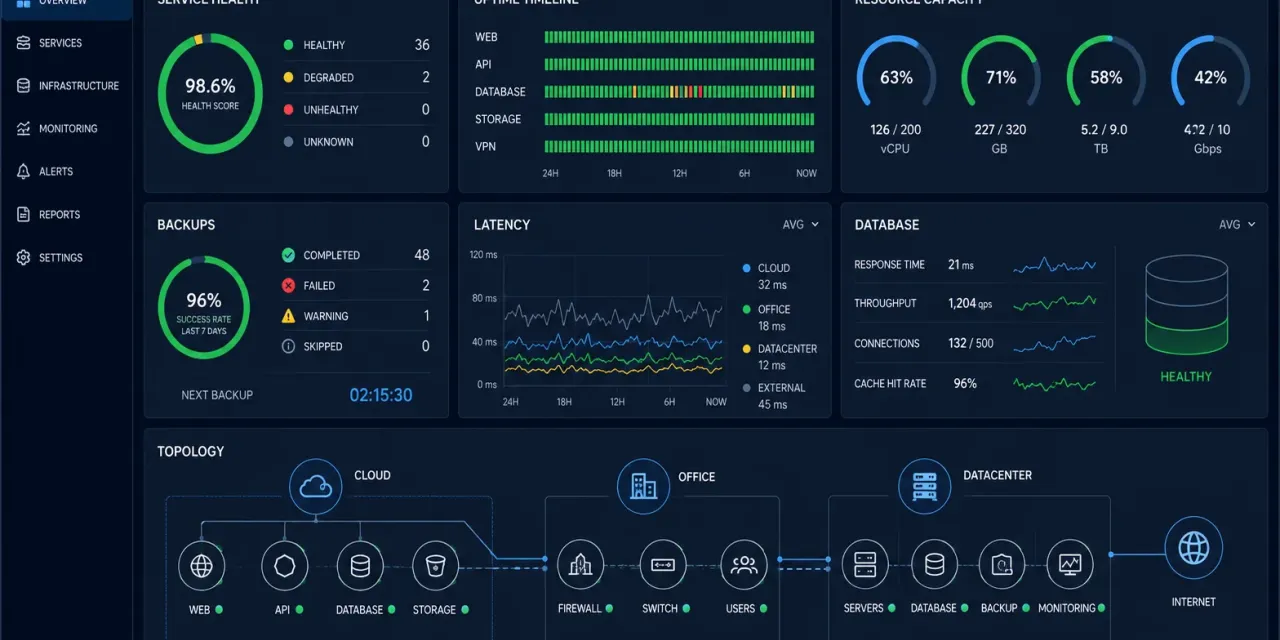
Almost every growing company learns the same painful lesson: scattered servers, duplicated data, and costs that climb faster than revenue. Then they discover the fix, a managed cloud infrastructure.
What to measure before and after migration
- Compare total infrastructure cost, including support, licensing, storage, and data transfer. Savings depend on the workload and design.
- Downtime drops from hours to minutes with proper redundancy.
- Security improves dramatically when compliance controls are built in from day one.
The migration, step by step
- Assess the current estate, a full audit of what you run and what it costs.
- Choose the platform, AWS, Azure, or Google Cloud, matched to your workloads.
- Migrate gradually, a pilot first, then a controlled full migration.
- Monitor continuously, 24/7 visibility over health and spend.
- Optimize, right-size resources so you never pay for idle capacity.
The mistakes to avoid
- Rushing the migration with no plan.
- Failing to encrypt data in transit.
- Leaving legacy infrastructure half-connected.
- Skipping team training on the new environment.
How DinoSoft helps
We provide cloud architecture design, migration planning, and post-migration support, with scope, acceptance criteria, and operating costs agreed before implementation.
Thinking about moving to the cloud? Let's map your migration.
Tags: Cloud Migration AWS Azure Cost Optimization